Our Work
Recent Projects
A few finished driveways, patios, and repairs from around the area.
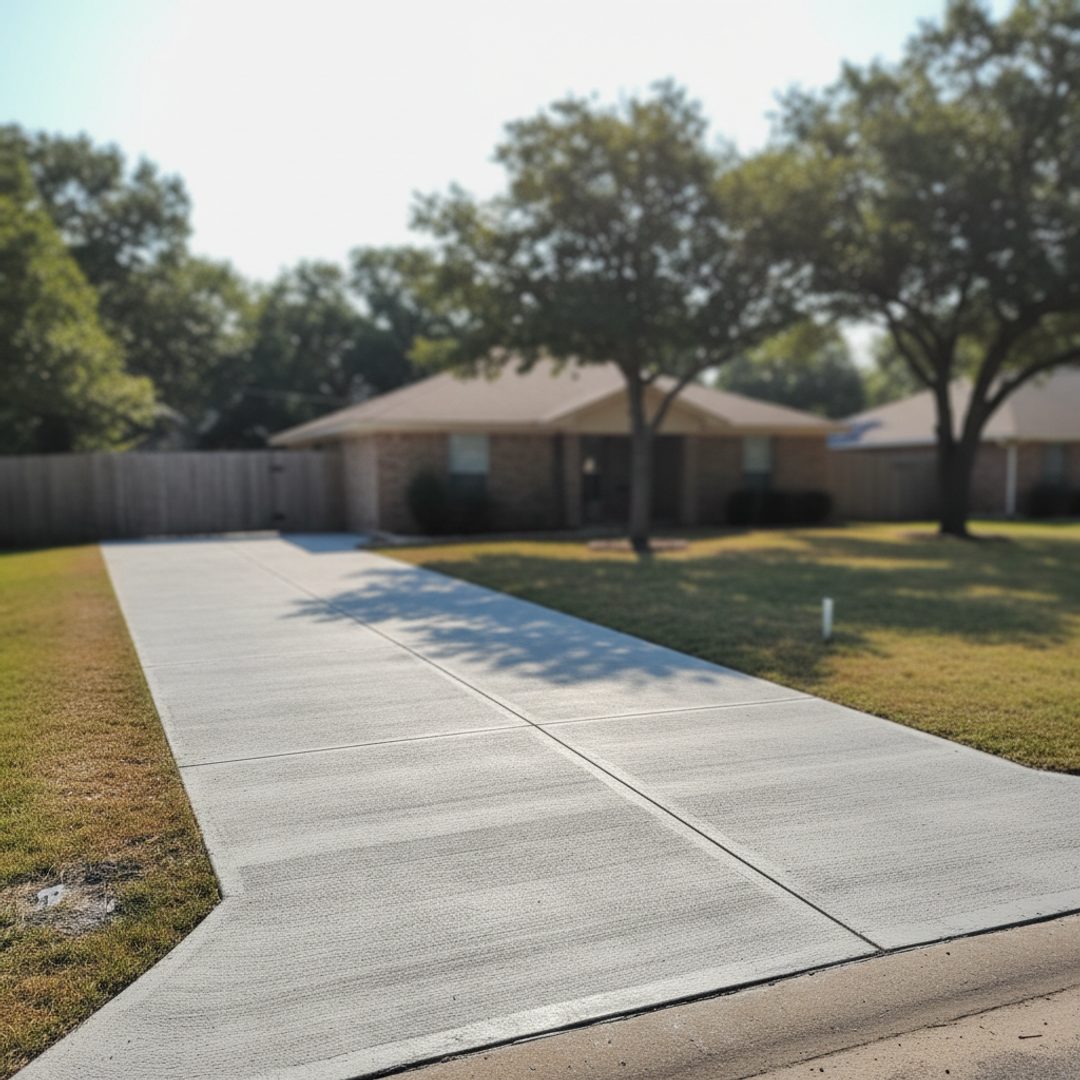
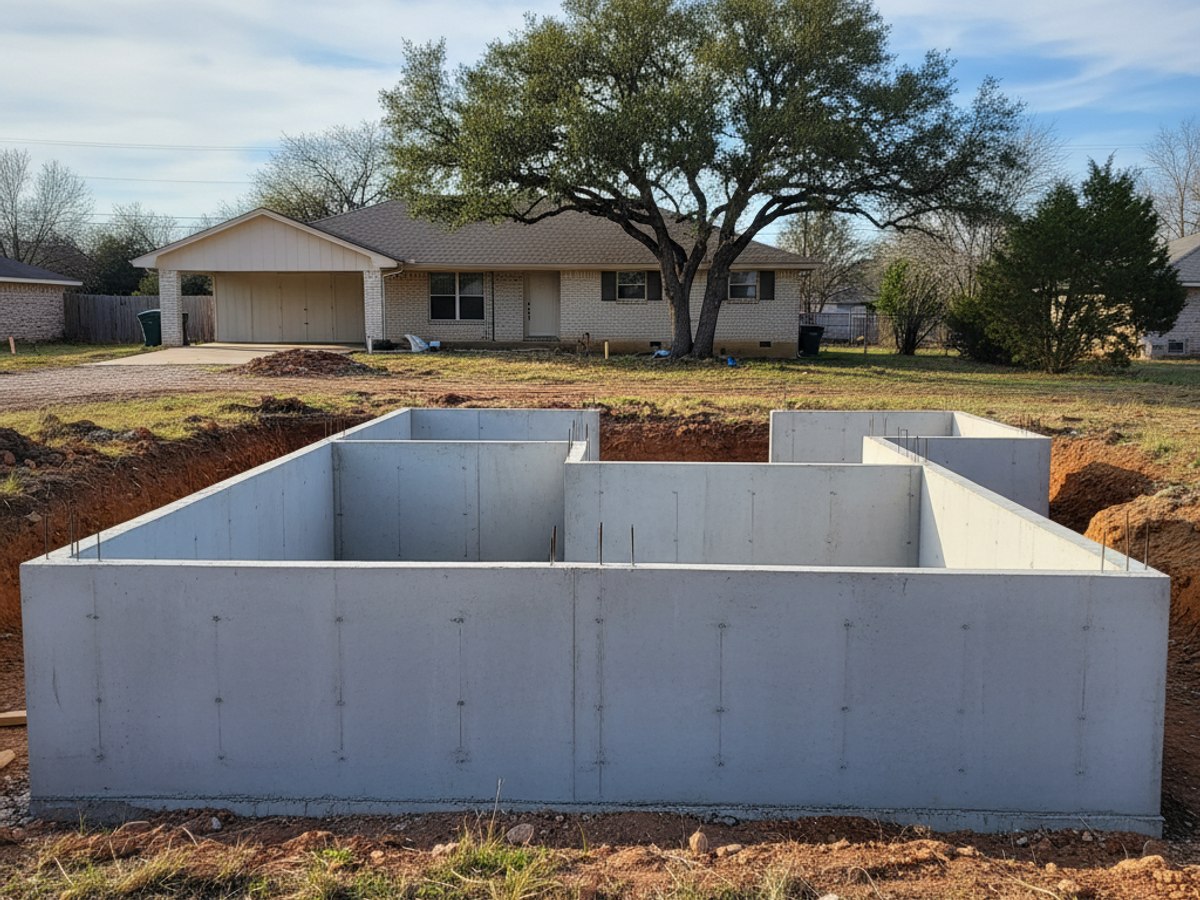
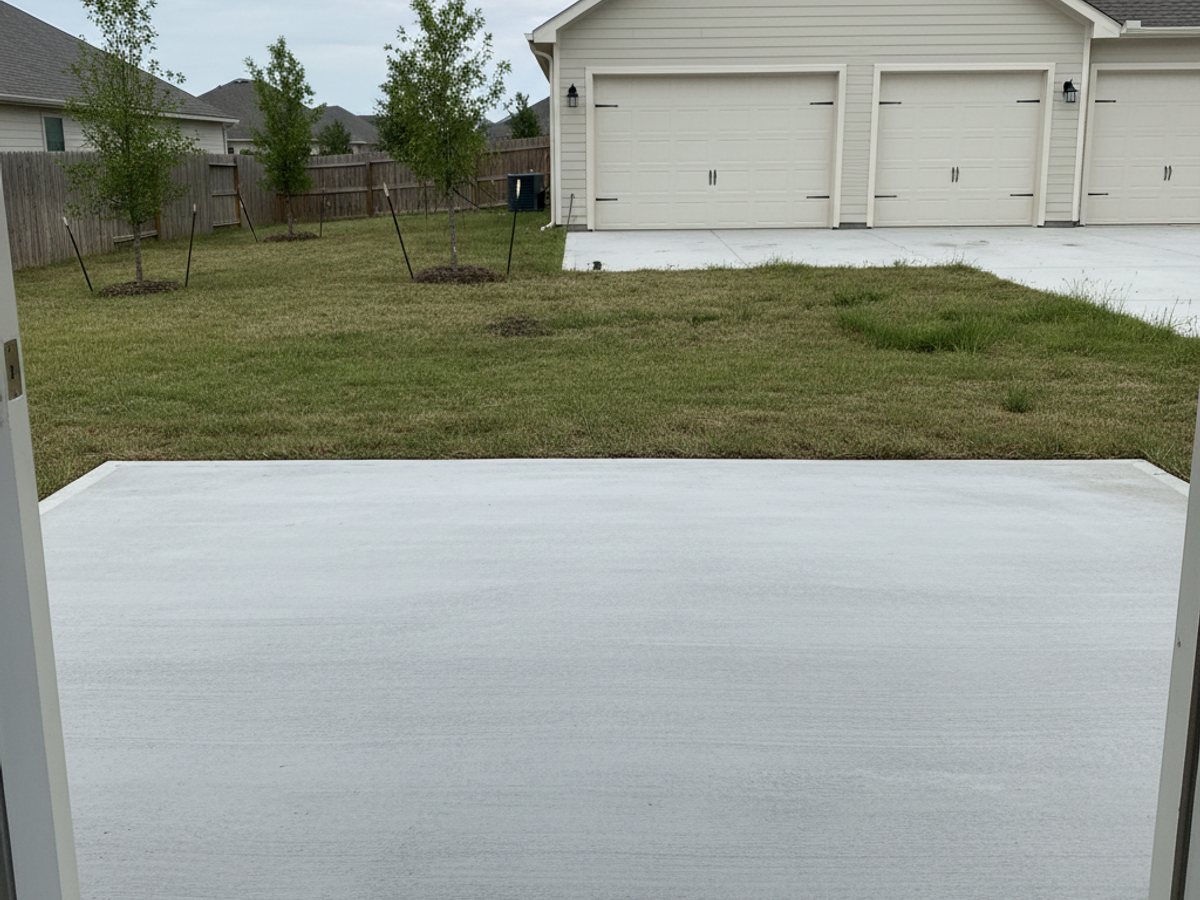
Every job below is one we do ourselves across Rowlett.
We pour driveways over a compacted base, usually 4 to 6 inches of road base, then finish with 4 to 5 inches of concrete depending on whether trucks or trailers will sit on it. Control joints get cut the same day, spaced to match the slab thickness, so the driveway cracks along the joint instead of down the middle. Plan on 24 hours before foot traffic and 5 to 7 days before you drive on it.
Patios get a broom finish for grip and a slight slope away from the house so water doesn't pool against the foundation. We run control joints every 8 to 10 feet and tie the patio into the drainage instead of just pouring flat and hoping.
Stamped concrete gives you the look of flagstone, slate, or cobblestone without individual pavers to relevel every few years. We lay color hardener into the surface, stamp the pattern while it's still workable, then seal it once it's cured to bring out the color.
Cracked driveways, spalled patios, and slabs with the top layer flaking off are the calls we get most. Small cracks can sometimes be routed and filled, but a slab that's heaved or badly spalled usually needs to come out, not just be patched over the top, because a patch bonded to failing concrete fails with it.
We pour slab foundations with footings sized to the load and rebar tied into a grid instead of set loose in the forms. Clay soil around Rowlett moves enough with the seasons that we grade and compact the base carefully before any concrete goes in.
Sidewalks get jointed roughly every 5 feet to control cracking and sloped slightly for drainage. If the walkway ties into a driveway apron or a city right of way, that part usually needs a permit and an inspection before we pour.
A retaining wall holds back soil, not water, so drainage behind it matters as much as the concrete itself. We set footings below the frost line for this area and build in weep holes or gravel backfill so water doesn't build up and push the wall over.
Pool decks get a broom or knockdown finish so the surface isn't slick when it's wet. We run an isolation joint where the deck meets the pool shell, since the pool and the deck move independently and a rigid connection between them cracks.
Exposed aggregate concrete gets washed and brushed while it's curing to expose the stone underneath the cream layer, then sealed to lock it in. It holds up well on driveways and pool surrounds where you want a textured, slip-resistant surface.
A sunken slab is usually sitting on soil that's eroded or washed out underneath it, not concrete that's actually failed. We can often lift it back into place with mudjacking or polyurethane foam injection instead of tearing the whole slab out.
Four steps, and no surprises in any of them.
You tell us what you want doing, we look at what is actually there, and we ask the awkward questions early.
In writing, itemised, free. If something might add cost later we flag it now rather than at the end.
Same crew throughout. We cover your floors, keep the dust down and tidy up before we leave each day.
You point out anything you are not happy with and we fix it before the invoice, not after.
A few finished driveways, patios, and repairs from around the area.
Concrete work gets quoted a little differently city to city depending on soil and permit rules.
Questions that come up once a concrete project is actually underway.
Describe the problem and we will tell you what it probably is. No obligation.