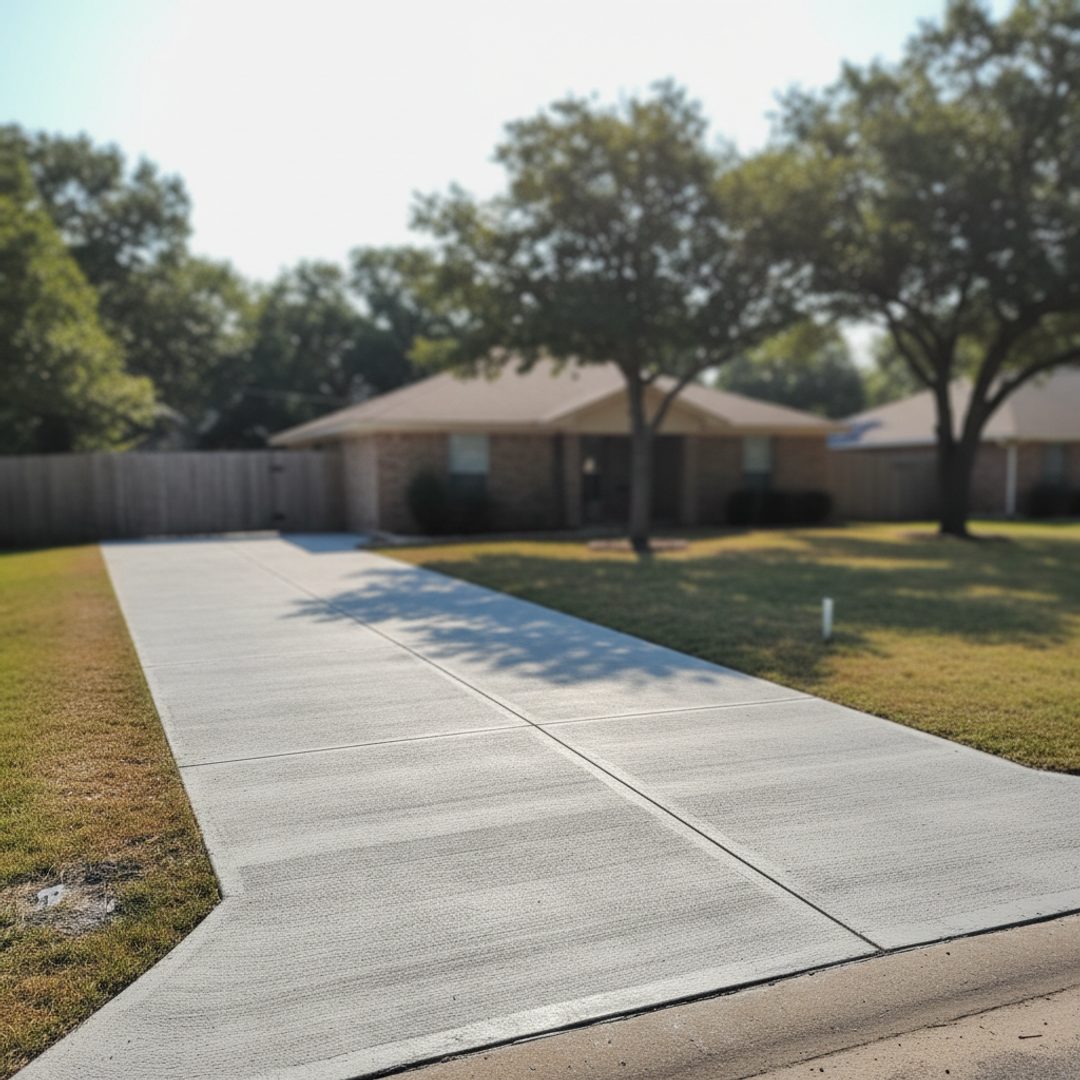
Rowlett sits on Blackland Prairie clay, the same heavy black gumbo that runs through most of North Texas. That soil swells when it's wet and shrinks hard when it dries out, sometimes moving an inch or more across a season. Any contractor who's poured slabs here for a while knows that clay, not the concrete itself, causes most of the cracking and settling homeowners call about. If the person bidding your job doesn't bring up soil prep before you ask, that's worth noticing.
Ask what's happening under the slab before you ask about the finish
A driveway or patio is only as good as what's underneath it. On Rowlett clay, that usually means excavating 6 to 8 inches, laying down compacted base material like crushed limestone or road base, and getting it properly graded before any concrete goes down. Skip that step or compact it poorly, and you'll see settling within two or three years, sometimes sooner after a wet spring. Ask the contractor directly what base they use and how thick it will be. If the answer is vague, or if they say they'll pour straight onto graded dirt, walk.
Same goes for reinforcement. A standard driveway slab should run 5 to 6 inches thick with either rebar, usually #3 rebar on 18-inch centers, or a wire mesh, and rebar holds up better on expansive soils than mesh does. Sidewalks and patios can get by at 4 inches. Fiber mesh mixed into the concrete itself helps with surface cracking but it's not a substitute for rebar in the ground. Get the thickness and reinforcement written into the bid, not just implied in conversation.
Permits and HOAs in Rowlett aren't optional paperwork
Rowlett straddles Dallas and Rockwall counties, and most residential concrete work here, driveways, extended patios, retaining walls over a certain height, needs a permit through the City of Rowlett before work starts. A contractor who does this regularly pulls that permit themselves and knows what inspection points the city checks, typically before the pour for footing depth and reinforcement placement, and sometimes after for final grading. If a contractor tells you permits are unnecessary for a driveway replacement or a patio, they're either wrong or hoping you won't ask questions.
A lot of Rowlett's newer subdivisions, the ones built since the 2000s around Bayside and further out toward Lake Ray Hubbard, have HOAs with their own rules about concrete color, stamped patterns, and where a driveway can widen to. Older neighborhoods closer to the original townsite generally don't have that layer, but might have setback lines from a property survey worth checking before pouring a retaining wall near a fence line. A good contractor will ask if you're in an HOA. If they don't, ask them.
What a real bid looks like
A bid worth trusting spells out thickness, base depth, reinforcement type, expansion and control joint spacing, and a rough timeline including cure time before you can drive or walk on it. Concrete needs about 24 to 48 hours before foot traffic and 5 to 7 days before a car can sit on it, though full strength takes closer to 28 days. If someone tells you that you can park on a new driveway the next day, that's not confidence, that's a contractor rushing to the next job.
Control joints matter more than people think. Concrete is going to crack somewhere, that's just how it cures and shrinks. A contractor who saw-cuts joints within the first 24 hours, spaced roughly every 8 to 10 feet on a driveway, is giving the slab a place to crack on purpose instead of letting it pick its own spot down the middle. If a bid doesn't mention joint spacing at all, ask about it directly.
Get three bids if you can, but don't just take the cheapest one. A driveway bid that's 30% below everyone else's is usually cutting one of three things: base depth, reinforcement, or the amount of concrete in the truck. None of those show up until year two or three.
Insurance matters more than star ratings
Anyone can buy five-star reviews or ask friends to leave one. General liability insurance and workers' comp are different, they cover you if a crew member gets hurt on your property or a truck backs into your fence during the pour. Ask for a certificate of insurance before the job starts, not after. Texas doesn't license concrete contractors the way some states do, so insurance and a real track record of permitted jobs in the area are what you're actually checking.
Timing and Rowlett's weather
Summers here run hot, regularly over 100 degrees through July and August, and that heat pulls moisture out of curing concrete fast. A contractor working in August should be misting the slab or using a curing compound to keep it from drying too quickly and cracking on the surface. Spring, March through May, brings the heaviest rain in North Texas, and a contractor pouring during that stretch needs to watch the forecast closely, since concrete poured right before a downpour is a real problem. Hard freezes are rare here but they do happen, usually a handful of nights each winter, and a slab poured too close to one without protection can scale on the surface. None of this is complicated, but it's the kind of thing that separates a crew that's worked this area for years from one that isn't paying attention to the calendar.
Red flags worth walking away from
- No physical address or a phone number that only ever goes to voicemail.
- Asking for full payment upfront, before any work starts.
- No mention of a permit for driveway or patio work in the city.
- Can't tell you what base material they use or how thick the slab will be.
- Pushes mesh only, with no rebar option, on soil that's known to shift.
- Won't put the mix design, thickness, or joint spacing in writing.
None of these alone means a contractor is dishonest. Together, they mean you're guessing instead of knowing, and a slab isn't something you want to redo in four years because of a guess.
If you're weighing bids for a driveway, patio, or a slab that's already cracked and needs leveling, it helps to talk to someone who deals with Rowlett clay and Rowlett permitting every week rather than once a year. That's the kind of work we do at All Star Concrete Company, and we're glad to walk through what a bid should include before you sign anything.